


Visualize, Analyze, and Optimize AirflowMaking invisible air and gas flows visible - for controlled processes
Why Airflow Visualization Is Becoming Increasingly Important
Air and gas flows directly influence numerous industrial processes. They determine cleanroom conditions, heat transfer, energy efficiency, process stability, and the safe distribution of gases.
At the same time, requirements for documentation, quality assurance, and process understanding are increasing. Modern visualization technologies provide transparency in areas that previously could only be assessed indirectly.
This makes flow effects visible, technical relationships easier to understand, and optimization measures more reliable.
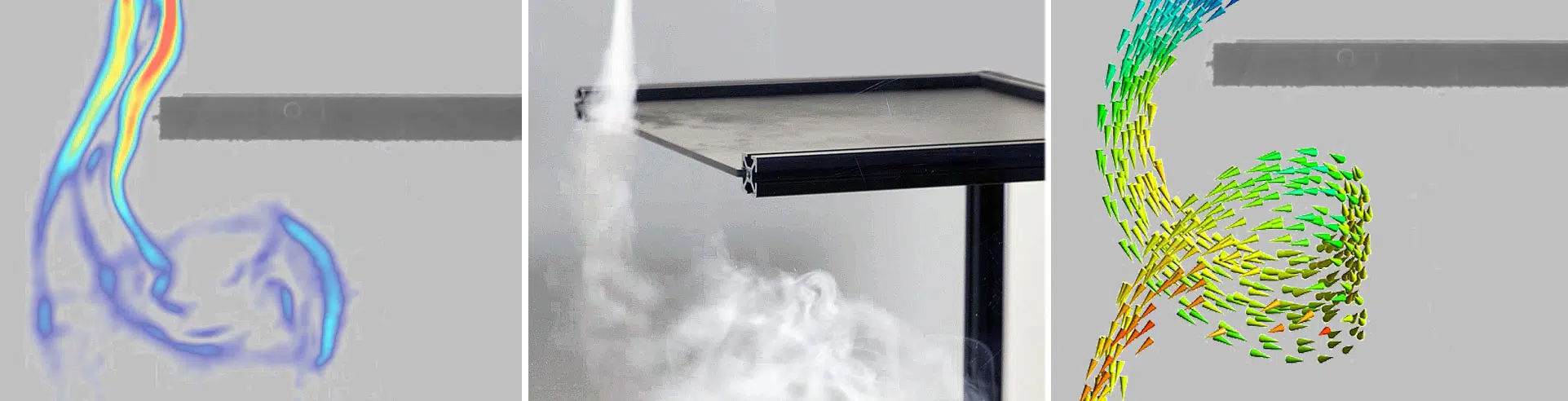
Technologies for Modern Airflow Visualization
Our imaging systems are based on Background-Oriented Schlieren (BOS) to capture flows with a level of detail never before achieved.

FlowBOS – Particle-Free Visualization of Air and Gas Flows
FlowBOS is based on Background Oriented Schlieren (BOS) technology and makes density differences in air and gases visible. This allows for the non-contact visualization of air flows, thermal convection, gas distributions, and flow patterns.
Since no smoke particles or tracer media are required, FlowBOS is particularly well-suited for sensitive environments such as cleanrooms, production areas, or thermal investigations.
Typical applications:
- Particle-Free Cleanroom Visualization
- Thermal Air Currents
- HVAC and Building Systems
- Airflow in Production Environments
- Visualization of Gas Distributions

Flow-TRX – Computer-Assisted Smoke Test Visualization
Flow-TRX is LaVision’s system for the standardized visualization and analysis of traditional smoke tests. Through computer-aided analysis of smoke movements, flow directions, vector fields, and qualitative velocity information are visualized and documented in a traceable manner.
This results in reproducible evaluations, more objective assessment criteria, and a seamless digital workflow—from data acquisition through visualization to report generation. The importance of such methods is growing steadily, particularly in regulated environments.
Typical applications:
- Smoke Studies
- Cleanroom Qualification
- Airflow Validation
- GMP Environments
- Documentation and Reporting Processes
Benefits for Industry and Quality Assurance
Understanding Processes Better
Making invisible flows visible and identifying technical relationships more quickly.
Improving Product Quality
Identify critical flow effects early on and optimize them in a targeted manner.
Improve cleanroom safety
Validate airflow patterns and minimize risks caused by unwanted airflow.
Improve energy efficiency
Analyze heat flows and air movements and identify opportunities for improvement.
Supporting Decision-Making
Visualized and documented results provide a solid foundation for optimization.
Simplify Documentation
Digital results support quality assurance, audits, and validation processes.
Industries & Applications

Energy & Gas Infrastructure

Pharmaceuticals & Biotechnology

Semiconductor Manufacturing, Semiconductor

HVAC & Building Technology

Automotive & Transportation
Investigation of thermal air flows, air conditioning concepts, and processes relevant to air distribution.

Research & Engineering
Lösungen zu Luftströmungs-Visualisierung und -Analyse
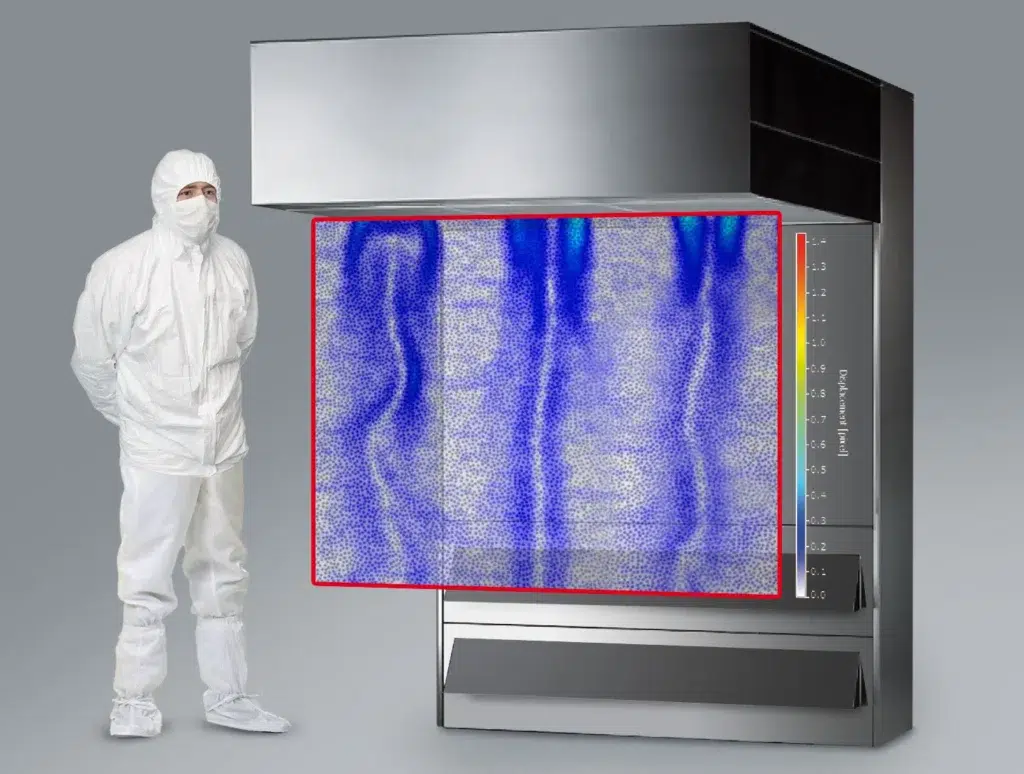
Airflow in Cleanrooms
Airflow is a critical factor for product quality, process reliability, and regulatory compliance in cleanrooms. Depending on the requirements, particle-free flow visualization or computer-aided smoke test visualization is used.
Typical topics:
- Smokeless Airflow Visualization
- Smoke Studies
- Cleanroom Validation
- Airflow
- GMP Documentation
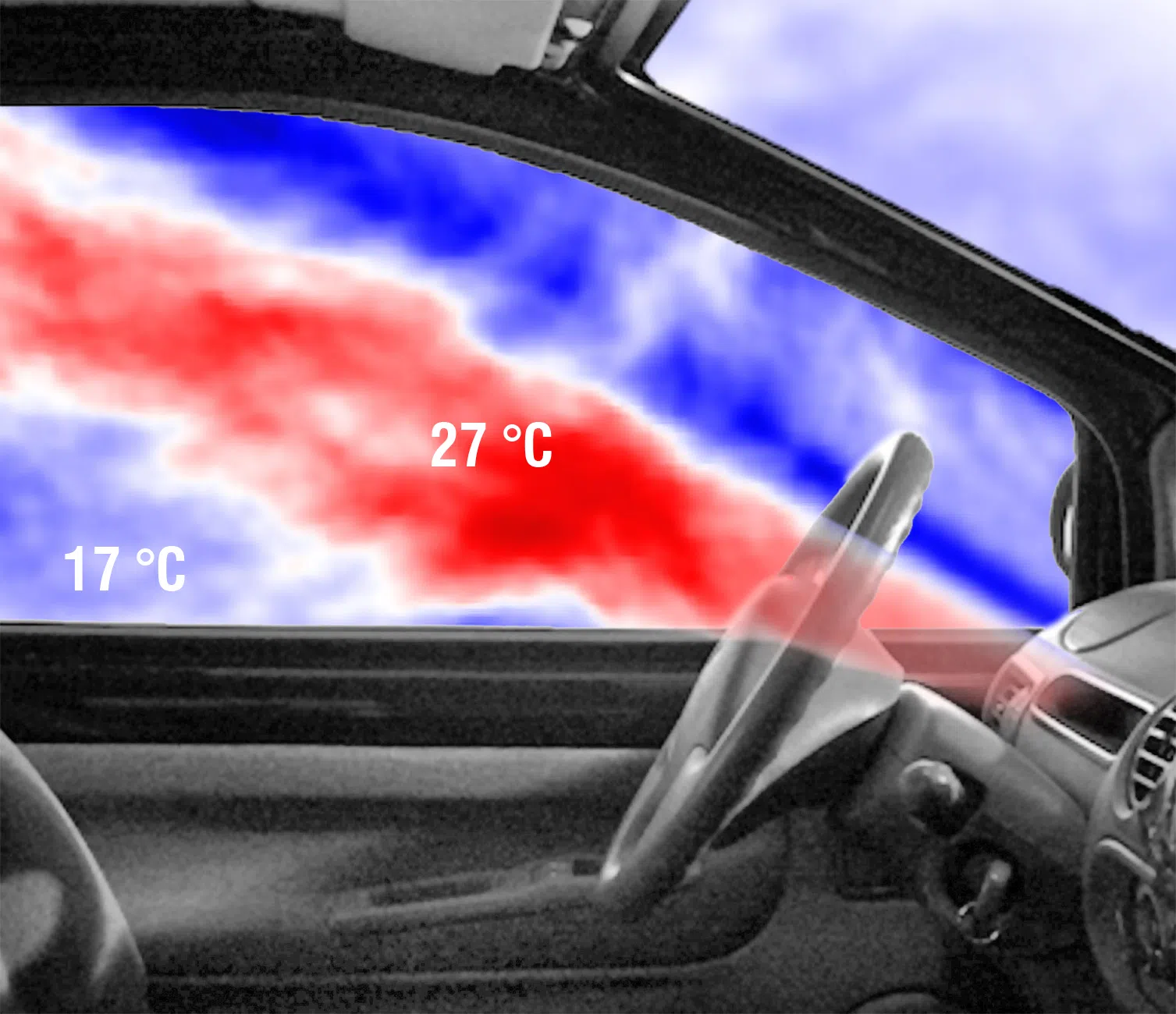
Thermal Air Currents
Thermal airflows influence cooling designs, energy efficiency, and the behavior of technical systems. Airflow visualization makes convective flows visible and supports the optimization of thermal processes.
Typical applications:
- HVAC
- Building Systems
- Electronic Cooling
- Automotive Climate Control
- Energy Efficiency

Gas Flow in Distribution Networks
The safe supply and distribution of hydrogen and other energy gases requires a deep understanding of flow behavior within infrastructure and facilities.
Typical applications:
- Hydrogen Distribution
- Storage Systems
- Blow-off processes
- Gas Releases
- Infrastructure Validation
Instead of talking about abstract expertise, we let our results speak for themselves. Our customers benefit from a close partnership that goes far beyond the purchase of equipment. Tailored consulting—from selecting the right measurement system to its seamless integration into your processes. For more than three decades, LaVision has been developing and supporting, on an equal footing with its market partners worldwide, practical, mature technology that works in real time and delivers measurable added value for your business.