


Understand emissions. Comply with emission limits. Design combustion systems for the future. Analysis and Optimization of NOx Formation in Sustainable Combustion Processes
Why NOx Is the Key Bottleneck in Sustainable Combustion
Sustainable energy sources such as hydrogen and ammonia are considered key to the decarbonization of industrial combustion processes. In practice, however, it is not the CO₂ footprint alone that determines their long-term viability, but rather their actual emissions behavior under operating conditions. Nitrogen oxides (NOx) are the central limiting factor between technical feasibility, regulatory compliance, and economic scalability.
Especially with CO₂-free fuels, it is evident that being CO₂-free does not automatically mean low emissions. High flame temperatures, new reaction pathways, and transient effects lead to NOx formation, which cannot be reliably understood or sustainably reduced without targeted analysis. NOx analysis thus becomes a crucial lever for transitioning sustainable combustion concepts from the development phase to real-world industrial application.
Regulatory requirements make NOx analysis essential
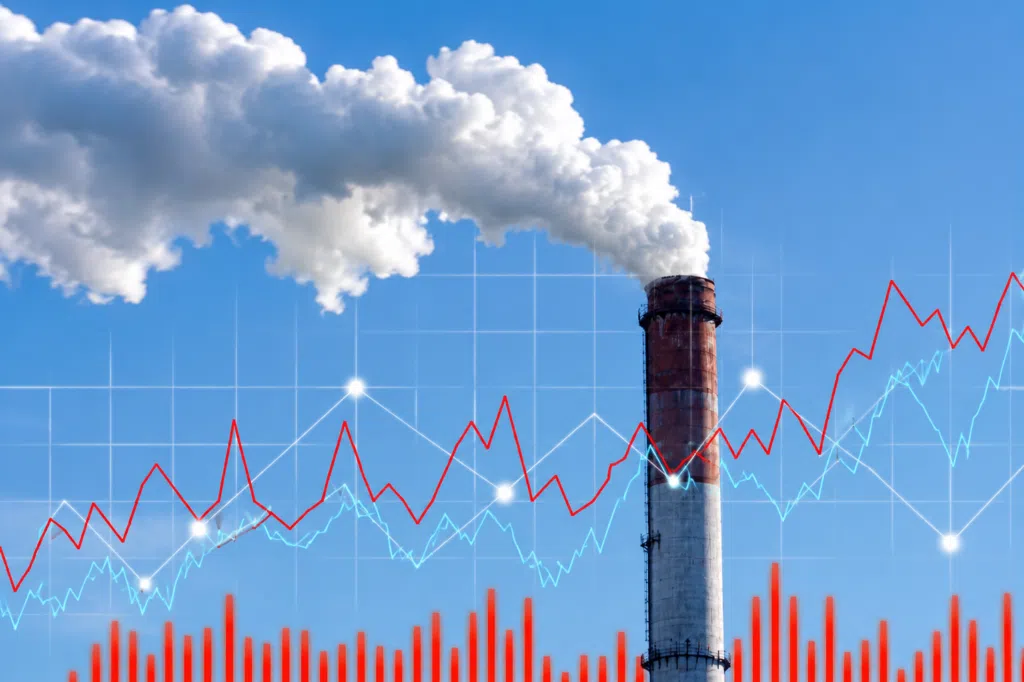
MARPOL Annex VI – Regulation 13 (IMO Tier I–III NOx Limits)
The key point here is:
- Limit values do not apply on average, but also at critical operating points,
- Emissions must be stable, controllable, and therefore adjustable,
- Transient effects and load cycling are increasingly becoming a focus for regulatory authorities.
Optical NOx analysis provides exactly the data needed to explain the formation of emissions in a transparent manner, reduce them in a targeted way, and document them in a manner that stands up to regulatory scrutiny.
Key Challenges in the Combustion of Sustainable Energy Sources
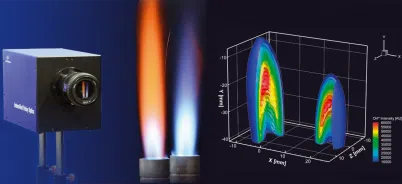
NOx formation is particularly critical during the combustion of hydrogen and ammonia
In the case of sustainable energy sources, NOx emissions arise through new and, in some cases, complex reaction pathways. Hydrogen promotes thermal NOx formation due to high flame temperatures, while ammonia introduces additional fuel nitrogen, causing different NOx formation processes to overlap.
These effects are locally confined, time-varying, and highly dependent on flame structure, mixture composition, and operating conditions. This is precisely where conventional exhaust gas measurement reaches its limits. To reduce NOx in a targeted manner, the locations and mechanisms of its formation must be understood directly within the flame—spatially, temporally, and in the context of the actual combustion process.
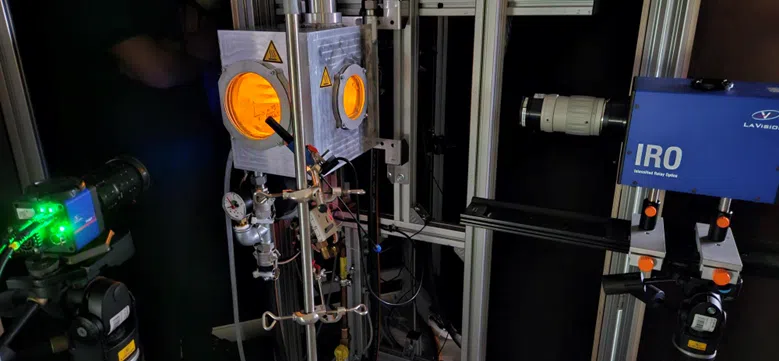
Why Optical NOx Analysis Is Indispensable
NOx is not produced uniformly throughout the flame, but rather locally and dynamically within it. Conventional exhaust gas analysis provides integral values but does not reveal where emissions originate or which processes drive them. For the first time, optical measurement techniques allow a direct view of NOx formation in the context of flame structure, temperature fields, and reaction zones.
Spatially and temporally resolved imaging allows for the identification of cause-and-effect relationships between the flame, temperature, and emissions. NOx analysis thus evolves from a mere control parameter into an active tool for combustion optimization.
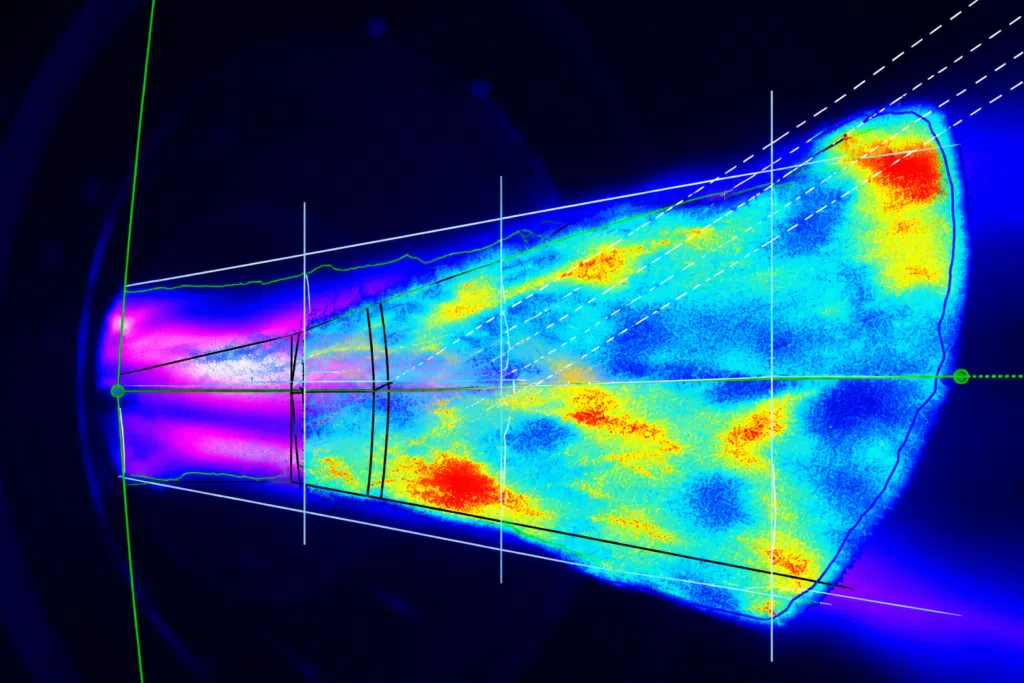
FlameStar NOx – Key Technology for NOx-Controlled Combustion
FlameStar NOx forms the technological basis for the optical analysis of flame and emission processes. Spectrally selective imaging enables the direct visualization of NOx emissions in high-temperature flames and reveals their spatial distribution and temporal dynamics. Combined with information on flame structure, temperature, and flow, this provides a consistent picture of emission formation directly within the process.
As a result, FlameStar NOx not only enables the identification of NOx hotspots but also provides insight into their causes. Based on this, burner design, operating points, and control strategies can be specifically adjusted—with the goal of reducing emissions while still increasing efficiency or stability.
Typical Questions in NOx Combustion Analysis
Where do NOx hotspots form in the flame—and why exactly there?
How do NOx emissions change during load changes or fuel switching?
What role do temperature, flame structure, and mixture composition play in NOx formation?
How can NOx emissions be reduced without sacrificing efficiency or stability?
How important is optical NOx analysis for compliance with statutory emission limits?
Why is optical NOx analysis important not only for research but also specifically for industrial applications?
Optical NOx analysis is used in both research and industry-related development and validation environments. It is particularly well-suited for test benches, demonstrators, and pilot plants where new fuels, burner designs, or operating strategies are evaluated. The insights gained are directly incorporated into industrial design, control systems, and emissions strategies.
Advanced Analyses & Specializations
FlameStar NOx – Specializing in Flame and Emission Analysis
Analyze Combustion & Emissions
Hydrogen Combustion Analysis
Ammonia Combustion Analysis
Analysis of Where Regulatory Boundaries Are Determined
Let’s work together to analyze how NOx formation, flame behavior, and operating conditions interact in your processes—and how emissions can be reduced in a targeted, traceable, and regulatory-compliant manner.