

Ensure flame stability. Increase efficiency. Control emissions. Analysis and Optimization of Hydrogen Combustion

Hydrogen combustion is physically different
Hydrogen combustion differs fundamentally from the combustion of conventional fuels such as natural gas or methane. High laminar flame velocity, extremely low minimum ignition energy, wide ignition and explosion limits, and the small molecular size combined with high diffusivity alter the overall stability behavior of a system. These properties open up significant efficiency potential but simultaneously increase the risk of flashback, blow-off, transient flame instabilities, and thermal NOx formation. Safe and low-emission hydrogen combustion therefore requires a precise, spatially and temporally resolved analysis directly within the flame. Only by physically understanding the flame structure, reaction zones, temperature distributions, and emission formation can stable operating windows be defined and regulatory requirements reliably met.
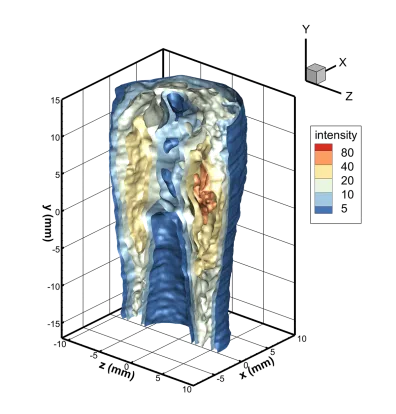
High-speed Tomographic LIF imaging of hydrogen flame using LaVision optical measurement technology
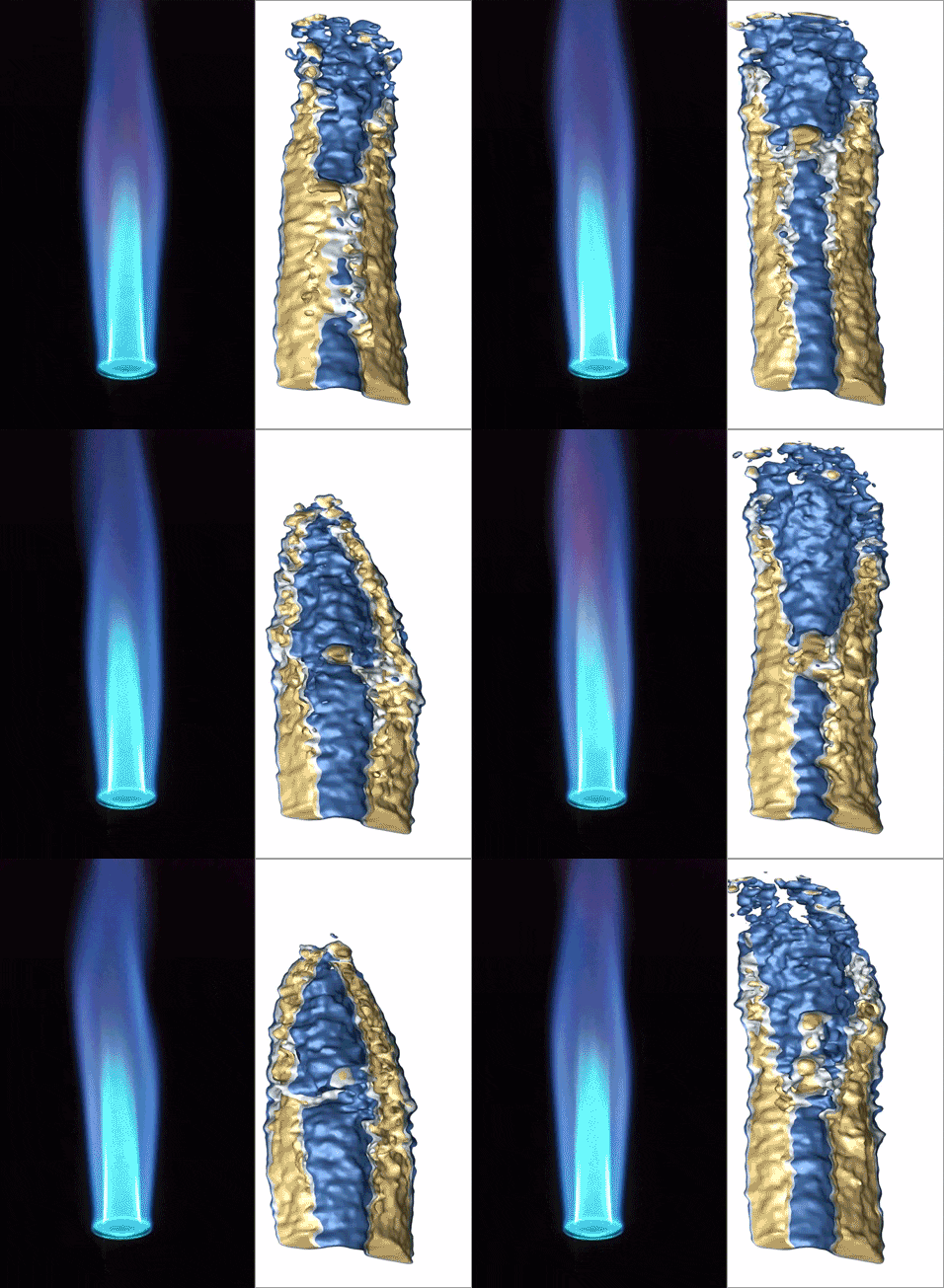
Bunsen flame labeled for hydrogen combustion analysis using LaVision optical measurement technology

Three Key Challenges in Hydrogen Combustion

Flame Stability and Dynamic Instabilities

The high flame speed of H₂ significantly shifts stability limits. Transient effects, flame oscillations, and boundary phenomena occur particularly during load changes or when the fuel mixture varies. Critical issues include flashback in premix sections, blow-off during lean operation, and dynamic instabilities during rapid load changes.

Flashback
, and premix sections

Due to the low ignition energy, the flame can propagate in the direction opposite to the flow. This particularly affects premix sections, nozzle designs, and injector geometries. The interaction between the flow field, the mixture, and the reaction zone determines stability and safety.

NOx Formation
with Hydrogen

Although hydrogen does not produce CO₂, significant thermal NOx formation can occur at high flame temperatures. Air staging, lean operation, exhaust gas recirculation, and targeted flame cooling are typical countermeasures; however, they require a precise analysis of the temperature and reaction fields.

Benefits of Optical Measurement Technology in Hydrogen Combustion

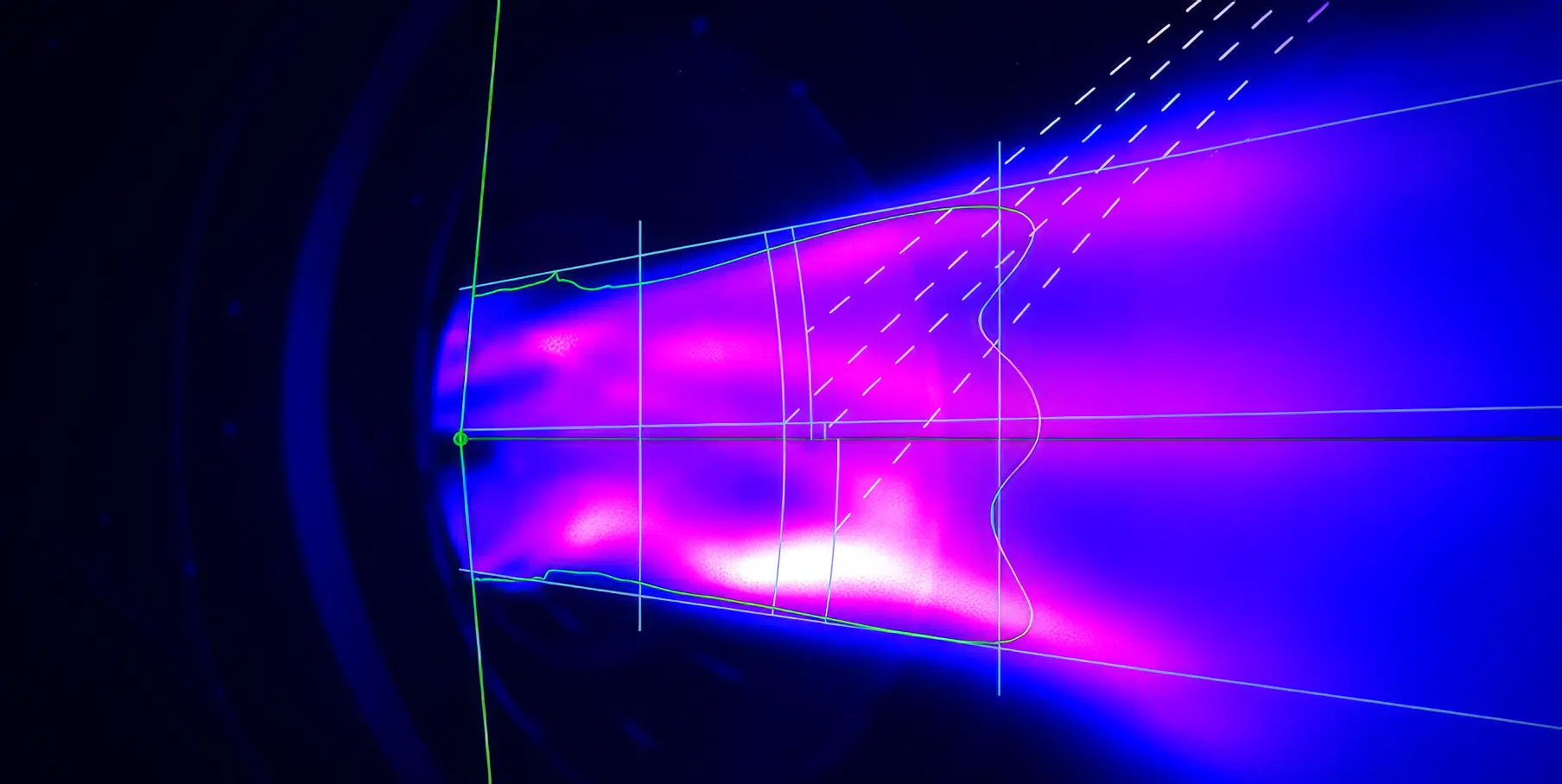
Optical combustion analysis makes it possible to visualize instabilities, emission mechanisms, and stability limits right where they physically occur. High-resolution imaging and time-resolved measurement techniques reveal flame fronts, radical species, temperature fields, and flow interactions directly within the reaction zone. Transient effects can be analyzed over time and correlated with flow or temperature fields. This makes cause-and-effect relationships transparent and allows for the targeted derivation of optimization measures. Hydrogen combustion is not only monitored but also quantitatively analyzed and systematically optimized.

From the Flame to a Validated Optimization Strategy

LaVision combines high-resolution imaging with quantitative evaluation and correlated analysis. Flame structure, reaction zones, temperature distributions, and emission fields are linked and interpreted physically. This yields reliable conclusions regarding flame stability, spatially resolved NOx emission maps, time-resolved instability analyses, and valid reference data for CFD and LES models. Hydrogen combustion is thus transformed from a process that is difficult to control into a measurable and controllable field of optimization.

Relevant Optical Analysis Methods in Hydrogen Combustion

Flame Emission and Chemiluminescence Imaging

Visualization of the flame front, structure, and stability using spectrally filtered emissions such as OH* or CH*.

Laser-Induced Fluorescence (LIF)

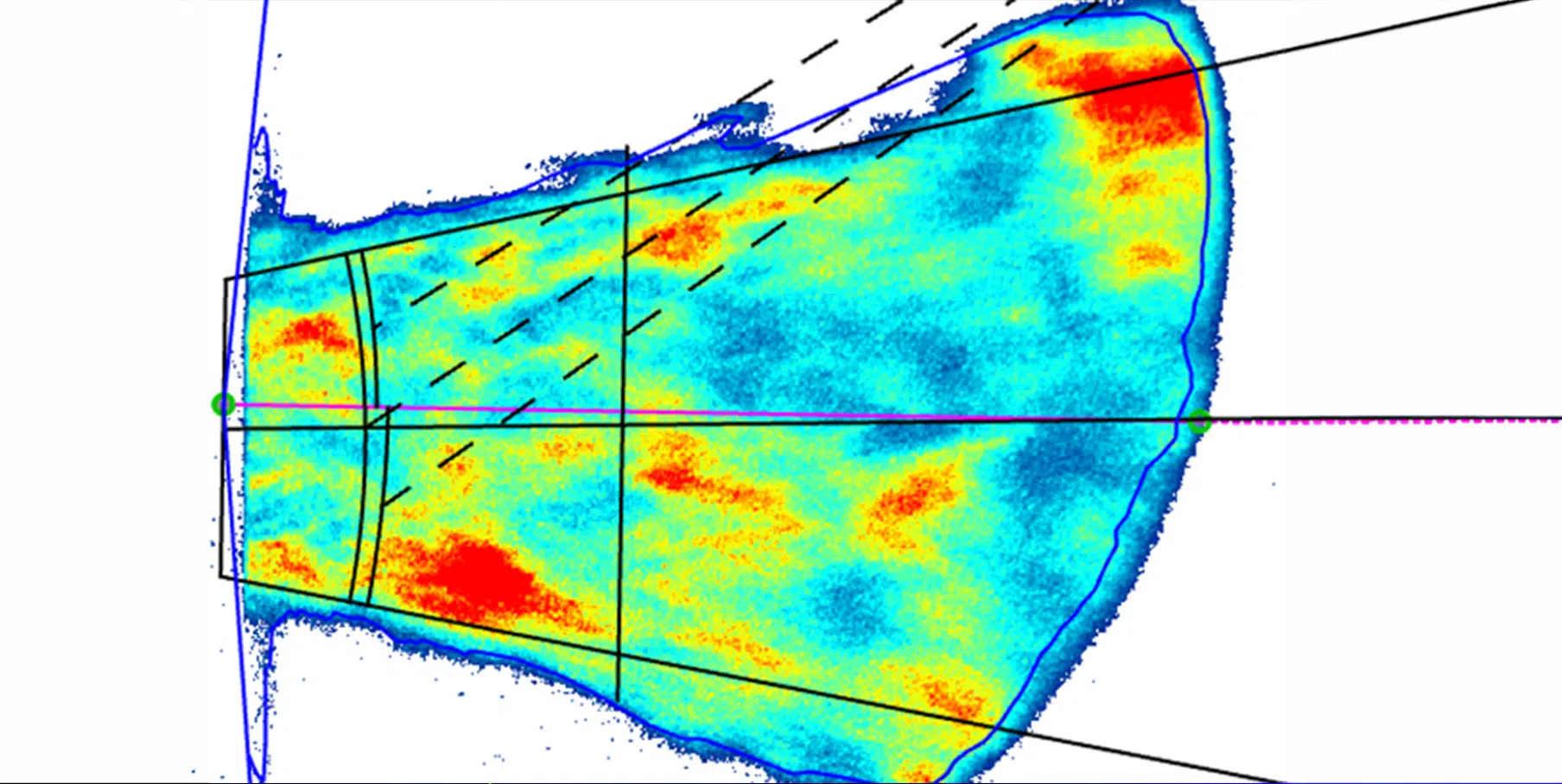
Laser-induced fluorescence for analyzing reactive species, fuel distributions, and reaction zones in the hydrogen flame.

Rayleigh and Raman Thermometry

Spatially resolved measurement of temperature and gas composition fields for the analysis of thermal NOx formation.

High-Speed and Time-Resolved Imaging

Detection of rapid instabilities, flashback events, and transient effects with high temporal resolution.

PIV in Flames

Particle Image Velocimetry for the analysis of flow fields and their relationship to flame stability and emission formation.

The Growing Industrial Importance of Hydrogen Combustion

As industrial energy and process systems undergo transformation, the importance of hydrogen combustion in industrial furnaces, process heating systems, power plants, gas turbines, and hydrogen internal combustion engines is increasing. The transition from natural gas to hydrogen often results in altered stability limits, new emission patterns, and more complex control requirements. Without precise combustion analysis, these effects can only be managed to a limited extent.

Making Hydrogen
Visible –
FlowBOS

Hydrogen is colorless, odorless, and tasteless, and has a high diffusion rate due to its small molecular size. Its wide explosion limits increase the risk of uncontrolled ignition in the event of leaks. FlowBOS makes invisible hydrogen flows visible by optically detecting density gradients in the gas. This enables the early detection of dispersion patterns and potential hazard zones, particularly in safety-critical applications, test stands, or industrial facilities.

Specific Q&A on Hydrogen Combustion

Hydrogen has a significantly higher laminar flame speed than natural gas. This shifts the stability limits and significantly increases the risk of flashback.
Using high-speed flame analysis and optical combustion diagnostics, backfires can be localized and their temporal progression can be precisely analyzed.
At high flame temperatures, atmospheric nitrogen is oxidized. Thermal NOx formation depends heavily on local temperature fields.
Lean operation reduces flame temperatures and NOx, but can increase the risk of blow-off.
Time-resolved imaging enables the analysis of transient hydrogen flame reactions during rapid load changes.
Measurement data with spatial and temporal resolution provide realistic reference values for CFD models.
Exhaust gas measurements provide only integral values, but no information about the mechanisms by which these values are generated within the flame.

From Flame to Emission—Targeted Analysis by Application

Ammonia Combustion Analysis

NOx Emissions Analysis – powered by FlameStar

FlameStar NOx – Core Technology for Combustion and Emissions Analysis

News

No data was found

Targeted Analysis and Stabilization of Hydrogen Combustion

The safe and low-emission use of hydrogen requires precise combustion diagnostics. Optical measurement technology allows for the direct analysis of flame stability, instabilities, and NOx formation within the reaction zone. Ensure the stability, efficiency, and regulatory compliance of your H₂ systems through well-founded, physically robust measurement data.
Name *
Email *

By submitting the form, you agree to the processing of your data in accordance with our Privacy Policy.
Name *
E-Mail *

Mit Absenden des Formulars erklären Sie sich mit unserer Verarbeitung Ihrer Daten gemäß der Datenschutzerklärung einverstanden.